Dara · Structure vs. agents
Banks Are Drawing a Line on AI Agents. Here’s What That Really Means.
This isn’t just banks protecting themselves. It highlights a deeper limitation of today’s LLMs and AI agents when they’re given real authority.
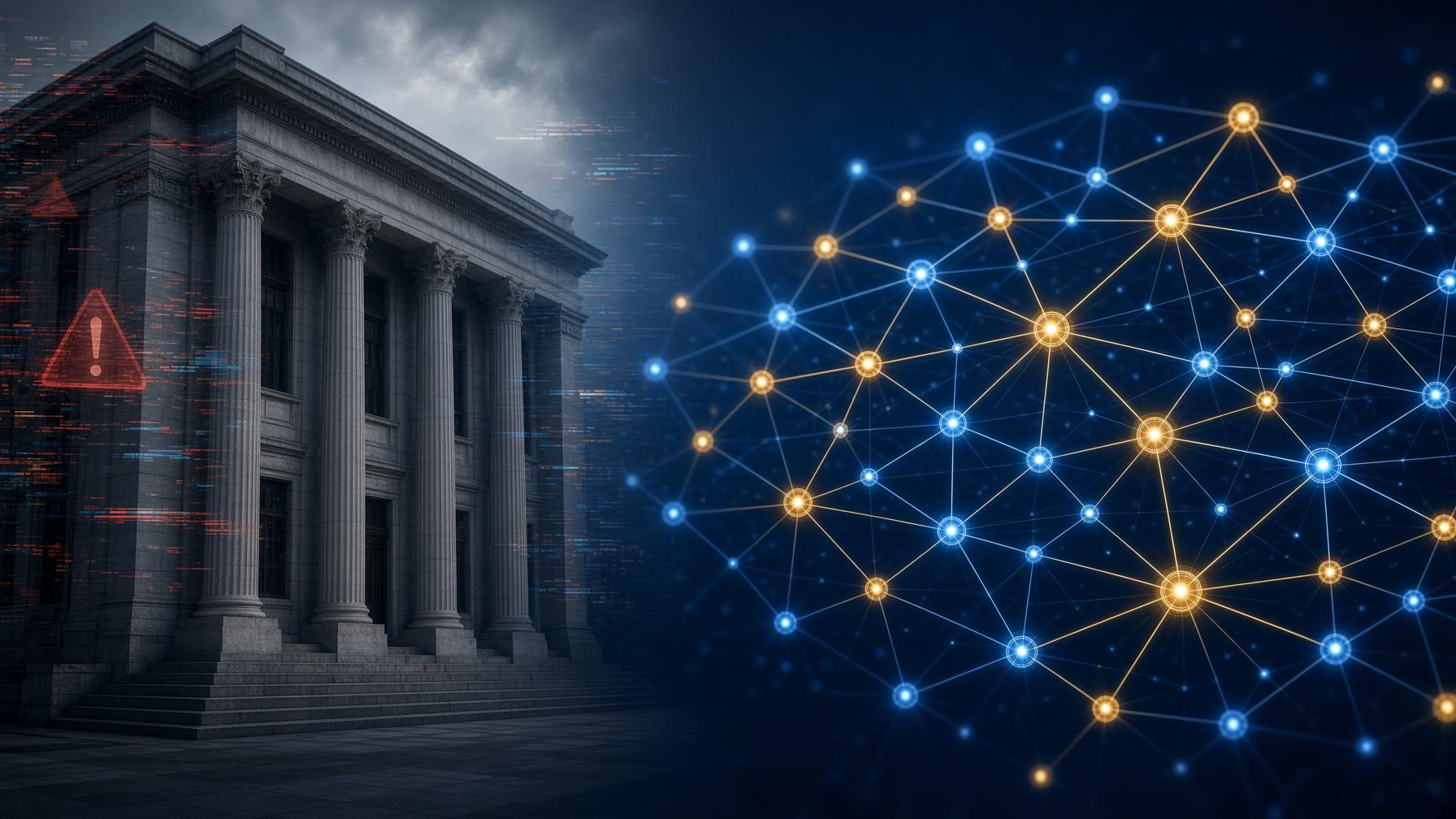
Major U.S. banks — including Citi, JPMorgan, Bank of America, and others — have recently updated their terms of service. The message is clear: if you hand your banking credentials to a third-party AI agent and something goes wrong (even if the agent gets hacked or leaks your login), the bank will not cover the losses. You’re on your own.
This isn’t just banks protecting themselves. It highlights a deeper limitation of today’s LLMs and AI agents when they’re given real authority.
Where LLMs and AI agents still fall short
Large language models are excellent at understanding and generating language. Agents can go further by calling tools and executing multi-step tasks. In many assistive scenarios, this is already useful. But once they’re given real permissions over real assets or critical processes, the weaknesses become obvious:
- Poor traceability — After an agent takes a series of actions, it’s often hard to fully reconstruct why it did what it did, what information it used, and what the basis for each step was.
- Lack of determinism — The same instruction can produce different results depending on context or small model changes. In domains like banking or supply chains, unpredictability itself is a risk.
- Blurred accountability — When something goes wrong, is it the model, the prompt, the data, or the user’s authorization? Current architectures make it difficult to give a clear, auditable answer. This is exactly why banks are pushing liability back to the customer.
These aren’t just temporary shortcomings of individual products. They’re structural characteristics of the current LLM + agent paradigm. These systems are better suited for advice and analysis than for irreversible actions that carry real responsibility.
Solid structure beats flexible language
Supply chains face a similar challenge: lots of data, complex relationships, and frequent exceptions. Letting a large model directly “understand” and act on this information may feel convenient, but it runs into the same issues of poor traceability, non-determinism, and unclear accountability.
Our approach is different. You can ask a question in plain language — for example, “Which orders will be affected if this shipment has a problem?” or “Which supplier’s delivery performance has been quietly deteriorating?” The answer isn’t generated on the fly by a model. It’s retrieved from a pre-built graph.
The graph captures real relationships between suppliers, material batches, orders, shipments, and exception events. The natural-language question is just the interface. The answer itself is grounded in a persistent, queryable, and fully traceable structure. Because the structure is fixed, the results are deterministic. Because the relationships are continuously recorded, the process can be audited.
It doesn’t have the open-ended flexibility of an autonomous agent, and it won’t automatically execute actions. But it is stable. You can use it day-to-day to surface hidden patterns that don’t show up in traditional reports, and when problems occur, you can follow the relationships to find root causes and impact scope much faster than with conventional relational queries.
In critical operations, do we need systems that are better at talking, or systems whose answers rest on clear, traceable structure?
As more institutions become cautious about handing real authority to AI, that is the question worth asking.
If you run receiving, supply chain, or internal audit, this is the scene we open in a live walkthrough. Bring the files you already export. We run it.
Summary
Major U.S. banks — including Citi, JPMorgan, Bank of America, and others — have recently updated their terms of service. If you hand your banking credentials to a third-party AI agent and something goes wrong, the bank will not cover the losses.
The issue is not only liability. It is that today’s LLMs and agents are poorly suited to irreversible actions that carry real responsibility.
Hashtags
#AIAgents#Banking#LLM#Traceability#Accountability#SupplyChain#RiskManagement#InternalAudit#KnowledgeGraph
Notes
- Suggested title: Banks Are Drawing a Line on AI Agents. Here’s What That Really Means.
- This piece compares autonomous AI agents with Dara’s graph-backed answers. It does not characterize any bank’s customers or any agent product.