Dara in hotels · Article 2 of 8
From a guest complaint to last night’s delivery: food safety is a path, not a folder
A guest calls down at 7 a.m. They ate the seafood platter. They are unwell. Front office opens the folio. None of that answers which delivery, which lot, which certificate — and can you open them?
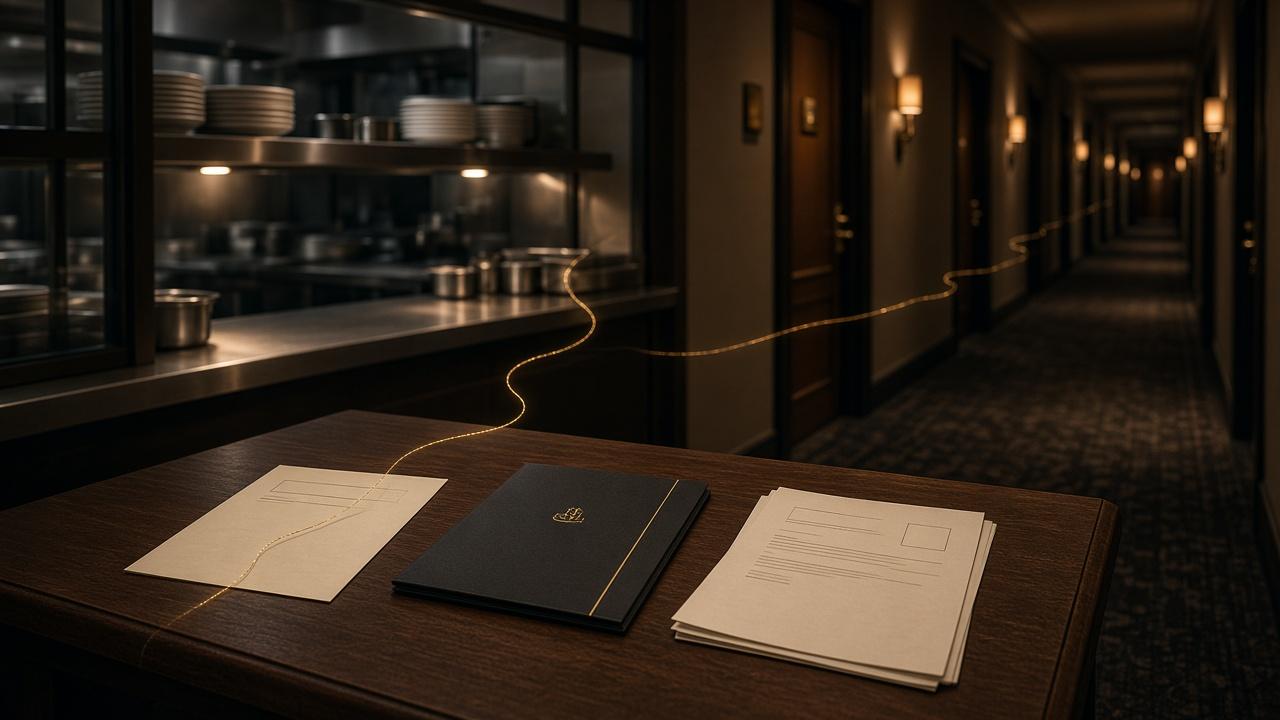
A guest calls down at 7 a.m. They ate the seafood platter. They are unwell. Front office opens the folio. The outlet manager remembers the buffet. Purchasing says the vendor is on the approved list.
None of that answers the question the kitchen, the health inspector, and the GM will all ask within the hour: which delivery, which lot, which certificate — and can you open them?
Food safety in a hotel is not a policy on the wall. It is whether a complaint or an inspection can walk, without a scavenger hunt, from the plate back to the dock.
The path that should already exist
Every property already captures the pieces. They rarely sit on one path.
- Guest folio and incident note in the PMS
- Check, cover, or banquet event order in POS or catering
- Recipe or production sheet in the kitchen
- Chilled-store and receiving log, with lot and use-by
- PO and goods receipt in purchasing
- Supplier certificate, insurance, and spec sheet in a vendor file or inbox
HACCP assumes you can move along that chain. In practice, the chain is a set of folders. The receiving clerk wrote the lot on a paper log. The certificate was emailed in March. The buffet item was a substitution the chef accepted at 4 p.m. and never wrote into the recipe.
When something goes wrong, the hotel does not lack care. It lacks a way to treat those facts as one record.
Mini-scenario: the breakfast complaint
Saturday breakfast. A guest reports illness after the smoked salmon. The duty manager logs it. Culinary pulls the production sheet. Stewarding finds a delivery note for “salmon, 4 kg” from Thursday. Purchasing forwards last quarter’s supplier certificate.
Two problems show up only when someone tries to join the documents. Thursday’s note is farmed salmon for the lunch sandwich. The breakfast item was a different lot, received Friday night, accepted by a steward covering overtime. The certificate on file is for the approved vendor. Friday’s delivery was a substitute from a sister company with a similar name.
The guest is still in house. The GM needs to know whether to isolate a lot, notify other covers, or treat this as an isolated plate. Until the folio, the check, the Friday receipt row, and the certificate for the company that actually delivered are on the same path, the hotel is guessing with confidence.
An approved-vendor list is not a trace. A trace is the row that received last night’s fish, and the certificate that belongs to that row — not to a name that looks close.
Mini-scenario: the inspector does not wait for Monday
A health inspector arrives unannounced during Saturday lunch. They ask for the receiving record and current certificate behind the oysters on the raw bar, plus the last temperature log for that cooler.
The F&B director can name the vendor. The steward can produce a week of paper logs. The certificate is in purchasing, and purchasing is off. POS can prove oysters were sold. None of that is the same as standing in the kitchen and opening the delivery that went into last night’s mise, the lot number on that line, and the certificate still in date for that supplier.
If a lot was short-received and a second case was taken from banquet hold, the paper log may show “oysters, OK.” It will not show which case. The inspector is not asking whether the hotel is serious. They are asking whether the hotel can still open the source.
What “we traced it” has to mean
In a hotel, “we traced it” is often a conversation. It needs to be a path that a reviewer can follow after the shift has gone home.
That path has to survive three tests:
- Identity — the vendor on the certificate is the vendor on the receipt, not a similar name
- Time — the lot on the plate is the lot on the dock, not last week’s delivery of the same SKU
- Source — every step still opens a file and a row: folio, check, receipt, certificate page
If any step is “we think” or “purchasing will send it Monday,” it is not yet evidence. It is a reconstruction. Reconstruction is slow, and it is how a contained issue becomes a recall conversation, a second guest, or a finding on the inspection report.
The same standard applies in the other direction. When a supplier issues a recall for a batch, the hotel should be able to ask which outlets, which banquet event orders, and which guest checks used that lot — and land on the rows, not on a memory of the weekend board.
Ask the question. Open the row.
A source-traceable record treats the guest, the check, the batch, the supplier, and the certificate as one path. Each fact keeps the file and row it came from.
Quality or the duty manager can ask in plain language: which deliveries sit behind last night’s seafood platter, and is the certificate current? The path should show the people and companies involved, then let someone open the original receiving line and the original document — not a screenshot of a summary.
Dara is built for that kind of trace. The graph is the record: complaint, outlet, batch, PO, supplier, certificate. AI can help draft the question. It does not decide whether the hotel has a food-safety incident. The investigator — executive chef, quality manager, GM — still owns the conclusion. What changes is the time between the call to the desk and a path a reviewer can open.
That is the difference between a HACCP folder and an investigation you can stand behind while the guest is still on property.
A practical next step
If a complaint or an inspection still sends three departments into three folders, I am happy to share a short pilot outline: one guest incident or one high-risk SKU, walked from folio to delivery to certificate.
Article 3 takes the same idea into a calendar the whole hotel knows too well: audit week, and the two weeks of file-hunting that usually come before it.
Summary
A guest is unwell. The inspector is in the kitchen. An approved-vendor list is not a trace. A trace is last night’s receiving row and the certificate that belongs to it.
Hashtags
#Hospitality#FoodSafety#HotelOperations#HACCP#Traceability#GuestExperience#Procurement#HealthInspection#FandB#RiskManagement
Notes
- Suggested headline: From a guest complaint to last night’s delivery: food safety is a path, not a folder
- This is a demonstration investigation: it shows how clues are found and how a working paper is formed. It does not characterize real parties.